


How to Choose Your Next Sewing Machine? (4 Tiers Explained)
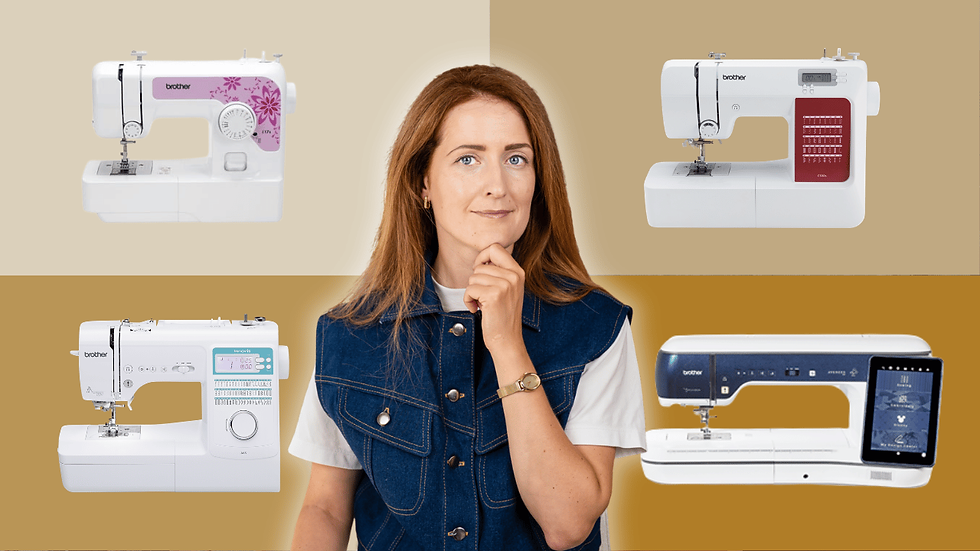
If you’re choosing your next sewing machine, there’s a huge trap you want to avoid: buying a machine you outgrow in six months, or overpaying for features you’ll never use.
In this post, let's talk about the 4 tiers of sewing machines - from budget-friendly €100 starter models, all the way up to highly advanced machines. By the end of this post, you’ll know exactly which tier matches your sewing style best.

This post is created in partnership with Brother.
Starting off, let’s look at:
TIER 1: ULTIMATE BEGINNER MECHANICAL

This is where most beginners start - a simple, classic, mechanical sewing machine, like Brother J17s. Price-wise, you can expect to pay around 100eur or just a bit under for a brand new machine.
The biggest strength of this machine is its simplicity: there are no screens, no menus, and no tech to figure out. You just turn the physical dial to your stitch, lower the presser foot, press the pedal, and you’re sewing. It’s so intuitive that you can start using it right away, even if you have never sewn before.

For a brand-new beginner, this will get you started. With just a basic straight stitch, a zigzag, and a standard buttonhole, you can sew about 80% of standard home projects on woven fabrics.
But... simplicity is a double-edged sword. If you start sewing more, with a beginner mechanical, you will hit a wall eventually. Because there are no built-in stretch stitches, trying to sew knit fabrics like t-shirts or hoodies is not really an option. Plus, adjusting your stitch length and width is usually limited to pre-set dial positions, and it also doesn’t have any comfort features that come handy in long sewing sessions.
Who is Tier 1 for? t’s perfect if you have a strict €100 budget, or if you’re only planning to mend clothes and do occasional weekend crafts.
But if you know you want to dive deeper into garment making, sewing knits, or you just want features that make sewing feel more comfortable... you might actually save money by skipping this tier entirely. Which brings us to:
TIER 2: BEGINNER COMPUTERIZED

If Tier 1 Beginner mechanical machine are all about getting your started, Tier 2 is where sewing actually gets fun and a whole lot more versatile.
Starting around €150, beginner computerized machines replace physical dials with digital screens and push buttons, so you can see your exact stitch type, width and length right in front of you. The biggest game-changer here is stitch variety: you get built-in stretch stitches - meaning you can finally sew knit fabrics like T-shirts, sweatshirts, and hoodies without popping seams. Plus, you get a few types of 1-step buttonholes, and decorative stitches.
On top of that, you get comfort upgrades: easier threading, snap-on feet, and speed control that make long sewing sessions feel easier.

Sewing-wise, it’s still accessible for a beginner, but you won't hit that frustration wall anywhere near as fast.
Who is Tier 2 for? It’s the sweet spot if you want to make your own clothes, sew stretchy fabrics, or if you just want a machine that will allow you to grow your skills for a few years before you ever need to think about upgrading.
And once you start feeling limited by space or speed, or you simply need more power, you’re ready for:
TIER 3: INTERMEDIATE MACHINES

Depending on the model, you can expect to spend anywhere from €500 to €1,000+.
At this level, the market splits into two completely different paths:
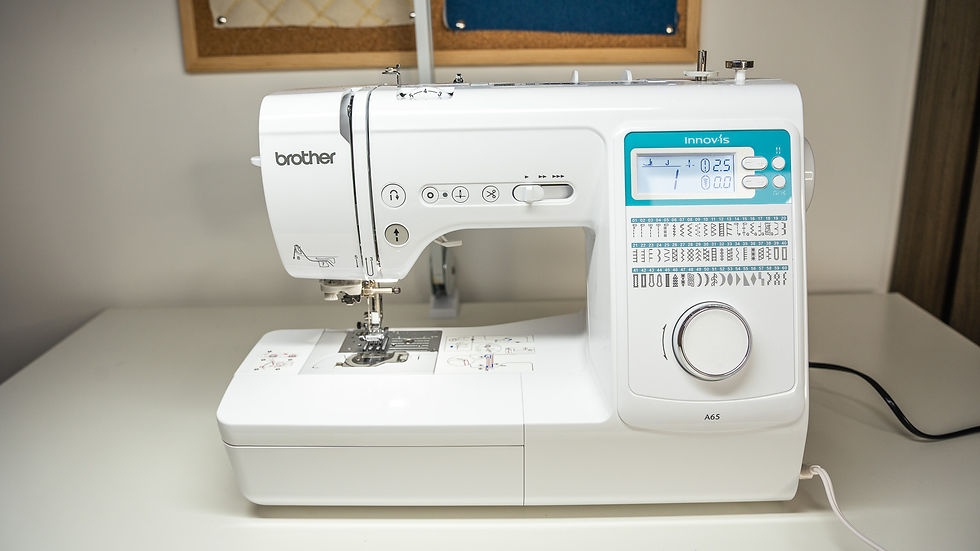
Option one is a powerful, feature-packed computerized machine, like Brother A65. You get a far wider selection of stitches alongside truly game-changing comfort features like an automatic thread cutter, a start-stop button, speed limiting sliders, and a much clearer screen.
Sewing-wise, it feels like a massive step up from a Tier 2 beginner computerized model, which is why at this tier I’d recommend trying machine in store before buying, so that you can feel the difference yourself.

Option two of intermediate machines is on the complete opposite end of the spectrum: a semi-industrial, straight-stitch-only machine, like Brother PQ1600s. It doesn't do zigzags, stretch stitches, or buttonholes. But what it does do is sew one flawless straight stitch—whether you’re gliding through thick denim or delicate silk. You still get main professional comfort features like a knee lifter, automatic thread cutting, and a larger throat space for big projects. Plus, it uses a very narrow presser foot, which is my absolute favorite for precision sewing.
By the time you reach Tier 3, you know what you like to make. If you love variety, sew knits, or need buttonholes and decorative stitches, go with the high-powered computerized route. But if you focus on classic garment construction - think bias tape, french seam or lined garments, if you sew, bags, or extreme fabric weights, the straight-stitch workhorse is an absolute dream.
Who is Tier 3 for? This is the sweet spot for most dedicated hobbyists. You get high-level power, speed, and durability without paying for features you won’t use. Take care of a Tier 3 machine, and it will comfortably last you decades without ever feeling outgrown.
And while Tier 3 is the sweet spot for most, there’s one final category left at the top of the spectrum:
TIER 4: HIGHLY ADVANCED MACHINES

At this Tier, machine are often referred to as Dream Machines.
Here machines start around €1,500 and can easily reach several thousand euros for feature-packed combination machine. They are much larger, exceptionally powerful, and packed with lots of features and innovative technology.
Because the investment is significant, Tier 4 is all about finding a machine built for your exact needs:
If you love custom detail: look at a combination machine that easily converts from standard sewing to full machine embroidery, without taking extra space of a second machine.
If you’re a quilter: Look for massive throat space alongside advanced features like stitch regulators, laser guides, echo quilting and continuous quilting stitching.
If you work with challenging fabrics: Look for machines with features like dual-feed systems that handle heavy layers effortlessly, paired with easy-to-switch straight stitch plates that prevent fine silks from getting sucked down into the bobbin.

Who is Tier 4 for? This tier is for passionate, highly active sewists, perhaps small business owners, or anyone who wants top-of-the-line power, precision, and comfort features without making a single compromise.
—----
Choosing a sewing machine isn't about buying the most expensive model on the market - it’s about finding a machine that matches your your exact needs. I hope this article helped you make this choice a bit easier!
Best wishes,
Julie


The distinction between an all-round machine and a straight-stitch specialist makes the project list a useful starting point. I’m writing from Sewlore, where our knit and jersey sewing projects at Sewlore offer examples of garments to consider before choosing equipment. Someone planning jersey tops has a different brief from someone concentrating on woven shirts. I would use that project list to choose fabrics for a dealer demonstration rather than decide by stitch count alone. Do you have a standard set of fabric samples you take when comparing machines?
The comparison between beginner, intermediate, and advanced machines makes it much easier to understand what features are actually worth halloween jackets paying for. Thanks for sharing such a practical guide!