


How To Choose Right Thread For Your Sewing Project

If you’ve ever dealt with a broken seam, skipped stitches, or fabric that puckers and immediately blamed your sewing machine, or worse, decided you’re just bad at sewing: I have some really good news - it’s probably not you.
The root of almost every sewing headache comes down to a tiny, overlooked trio: the wrong thread, the wrong needle, or the wrong tension settings. But once you know a few simple rules, you’ll be able to easily avoid these mistakes.
In this article, I'll share a tip how to choose a right thread for your sewing project.

I’ve partnered with Mettler for this post - they've been manufacturing high quality threads for decades, so they know exactly what it takes to get flawless results.

Let’s dive in:
HOW TO MATCH THREAD AND FABRIC
In the majority of sewing projects, all-purpose thread is great - it’s a true MVP for your standard, medium-weight fabrics like cottons and linens. But the second you step outside that middle ground into super lightweight or heavy weight fabrics, all-purpose isn't going to cut it and you have to choose thread strength that correlates with the weight to your fabric.
Here’s a simple rule to remember:
The thread should never be stronger than the fabric.
If your thread is way stronger than a delicate fabric, the fabric becomes the weakest link. Under any kind of stress, the thread won’t budge - instead, it will literally slice through and tear your fabric to pieces. And your project is ruined.
On the opposite end: if you use a fine, weaker thread on a heavy canvas or denim, the thread is going to snap or wear out almost instantly.
So, lightweight fabric gets fine thread. Heavyweight fabric gets thick, strong thread.
But how do you actually know which one is which when you're looking at a spool? If you’re using Mettler threads, at the bottom of each spool, you’ll see a little number next to the word 'No.' that indicates the thread strength - the higher the number, the finer the thread.

For example, polyester thread marked 150 (like Mettler Bobbinete) is very thin and perfect for delicate fabrics.

All-purpose thread (like Mettler Metrosene) is marked with number 100 - just the right strength for your medium-weight fabrics and most sewing projects.

Thread marked 36 (like Mettler Extra Strong) is very thick and strong, making it suitable for leather or denim.
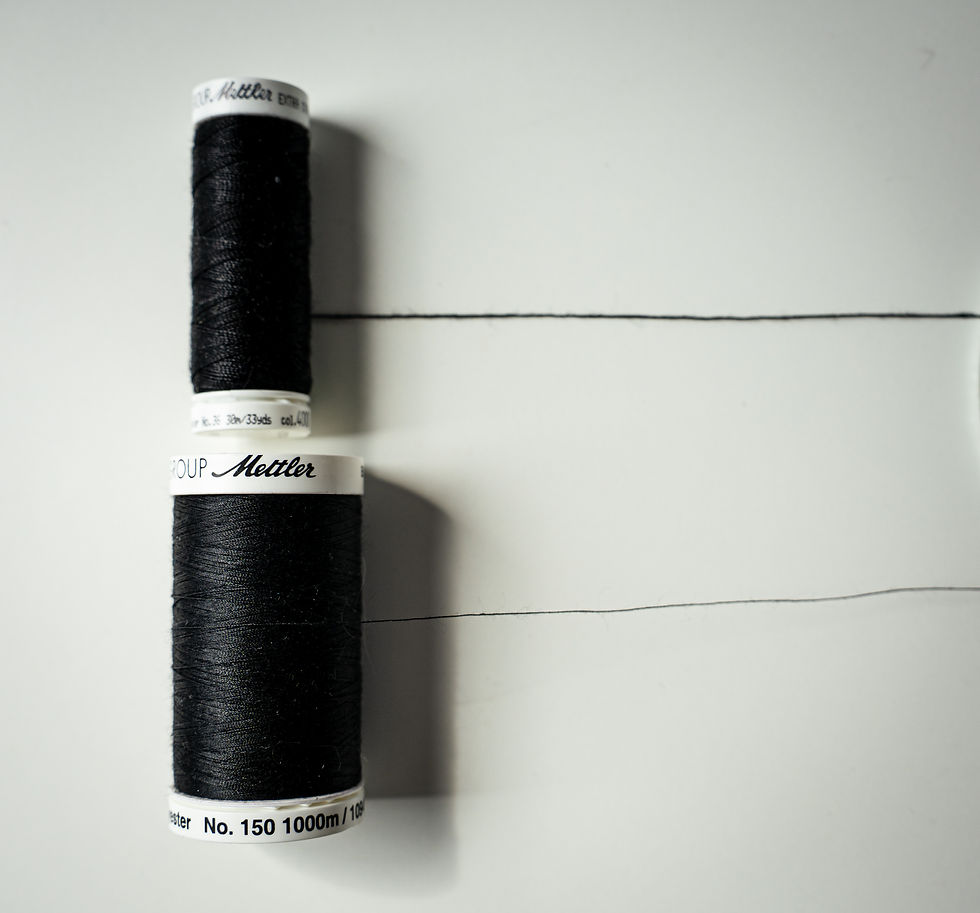
So next time, remember this cheat code: Big number, delicate fabric. Small number, heavy weight fabric. Keep that balance right, and your seams will actually last!
Enjoyed this tip? Here's a video with even more tips for better seams:
Thank you for reading and happy sewing!
Julija Gobere


I liked the point about choosing the right thread because it really can change how a sewing project turns out. I usually think about the fabric first, but matching the thread weight and material is just as important, especially when working on something that needs strong seams. It also reminded me that small details matter in other creative projects too. I work around printing at Book Printing, and I’ve noticed a similar thing when preparing flyer printing projects the paper and finishing choices need to suit the purpose rather than just look good on their own. The sewing tips here were a nice reminder of that.
This is so helpful! I've definitely been guilty of blaming my machine (and myself) for thread issues more times than I'd like to admit 😅 The 'big number = delicate, small number = heavy' cheat code is going straight into my sewing notes. Thanks for breaking it down so clearly—and for the Mettler recommendations too! 🙌
Great post! I like finding articles that are easy to read and actually useful. I’ve been playing Geometry Dash Lite recently, and it’s a fun browser game with great music, colorful levels, and simple controls that become surprisingly challenging as you progress.